The Hidden Cost of Being Busy
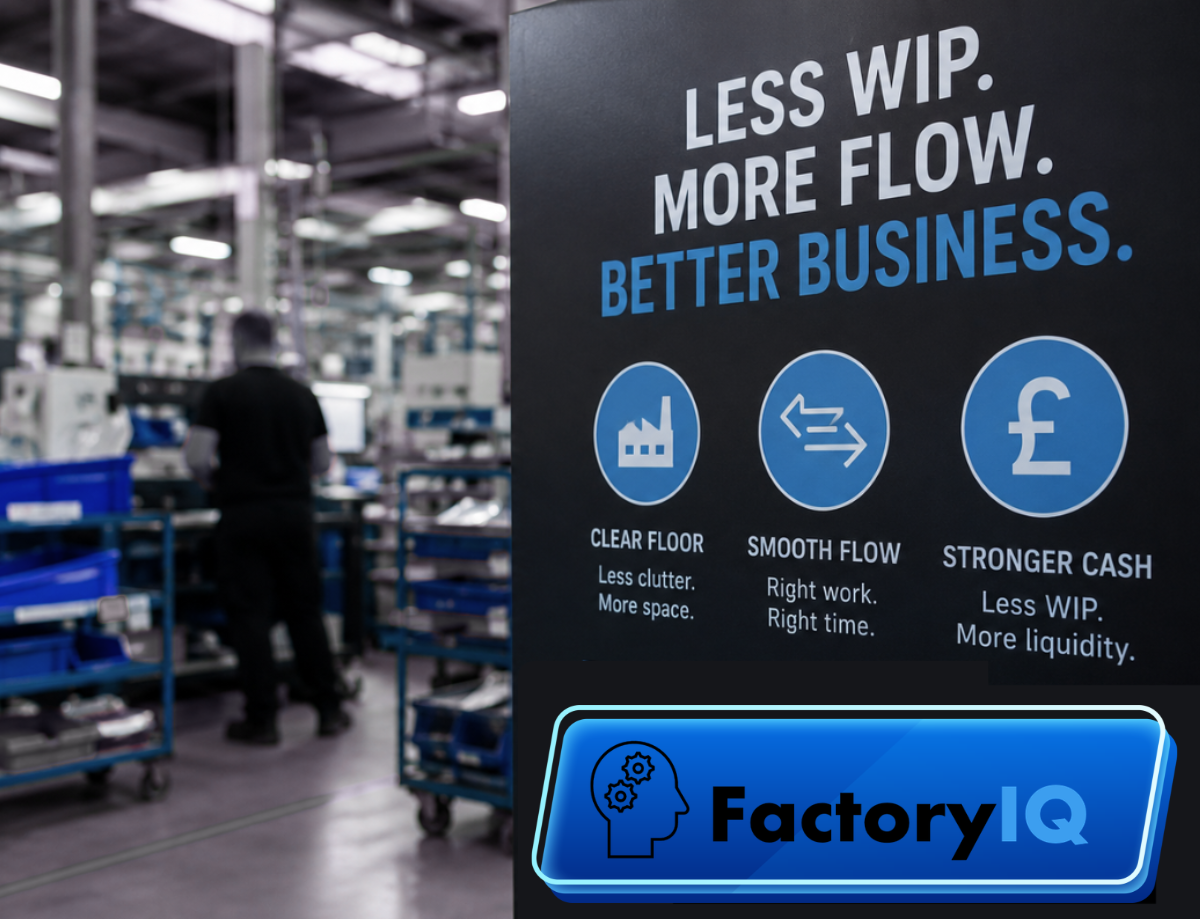
Work-in-progress (WIP) sounds harmless on paper. In reality, it's one of the biggest silent killers of flow in a manufacturing environment. Learn how an effective schedule can reduce WIP, improve throughput, and boost your bottom line.
The Hidden Cost of Being Busy: How WIP Is Slowing Your Factory Down
There's a point in most factories where you can feel the chaos before you even see it. Jobs stacked up between processes. Operators waiting on parts. Kits half-built sitting on benches "just in case someone gets to them." And someone always says the same thing: "Yeah… we're busy, but nothing's actually getting finished fast enough."
That's not a capacity problem. That's a WIP problem.
When "busy" actually means "blocked"
Work-in-progress (WIP) sounds harmless on paper. In reality, it's one of the biggest silent killers of flow in a manufacturing environment. Too much of it and parts are everywhere but nothing's complete. Bottlenecks get masked by piles of inventory. Operators juggle priorities instead of following a clean sequence. Cash quietly ties itself up on the shop floor.
It looks like productivity. It usually isn't. And most teams don't notice how bad it's got until space runs out, lead times start slipping, and customers start asking questions.
Where effective scheduling actually changes things
Scheduling isn't new, but doing it properly in a real production environment is where things get interesting. At its core, the principle is simple: devise an effective schedule and stick to it. Not change it when sales shout. Or when someone panics about a forecast. Not when "we've always done it that way."
When it's working properly, you get smoother flow between processes, fewer half-finished jobs clogging up benches, clearer priorities on the shop floor, and less firefighting. More rhythm. But here's the honest bit — scheduling only works when it is tight and visible. Without that, it falls apart quickly.
The real problem isn't production — it's timing
Most factories don't have a capacity problem. They've got a timing problem. Work gets released too early, or in the wrong order, and suddenly everything stacks up in front of the constraint process. That's when you get kitting overflowing, WIP piling up in front of one machine, operators waiting for sign-off or missing components, supervisors constantly reshuffling priorities.
It's not lack of effort. It's lack of coordination.
What changes when WIP comes down
When you start reducing WIP properly through effective scheduling, the difference is immediate. We've seen factories cut WIP by 30–40% within the first few weeks — and the first thing they notice isn't output. It's space.
Suddenly the floor isn't full of "almost finished" jobs everywhere. Then flow improves — work moves in a straight line instead of bouncing between queues. Then something more important happens: clarity. Everyone knows what matters right now, not just what's on the list.
And this is where cash starts to free up too. Unfinished work isn't just physical clutter — it's money sitting still. Raw materials, labour, overhead, all locked into something that hasn't shipped yet. Less WIP means less money trapped in the system.
Where FactoryIQ comes in
We built FactoryIQ around this exact problem. Scheduling properly isn't just about discipline — it's about visibility and control, and most scheduling tools weren't designed with that in mind.
FactoryIQ drives the shop floor from real capacity, real constraints, and real-time status. Sequencing reflects what's actually happening on the ground, not what someone assumed would happen when they built the plan. When that's in place, scheduling stops being a weekly firefight and starts becoming something closer to a controlled flow.
The shift you feel on the shop floor
The interesting part is it's not just a system change. It's a behaviour change. Supervisors stop over-releasing work "just in case." Operators stop jumping between jobs. Planning stops being about volume and starts being about flow.
And slowly, the floor stops feeling like it's under pressure all the time — even when output stays the same or improves. That's usually when people realise WIP wasn't helping them move faster. It was just making everything harder to see.
The floor tells you when it's working
Most factories don't need more work. They need better timing of the work they already have. Reduce WIP, improve flow, and suddenly everything feels simpler — fewer bottlenecks, shorter lead times, less chaos on the floor, and more cash actually moving through the business.
That's what effective scheduling is really trying to solve. Not just efficiency. Not just output. But getting control back over the system — one job at a time.